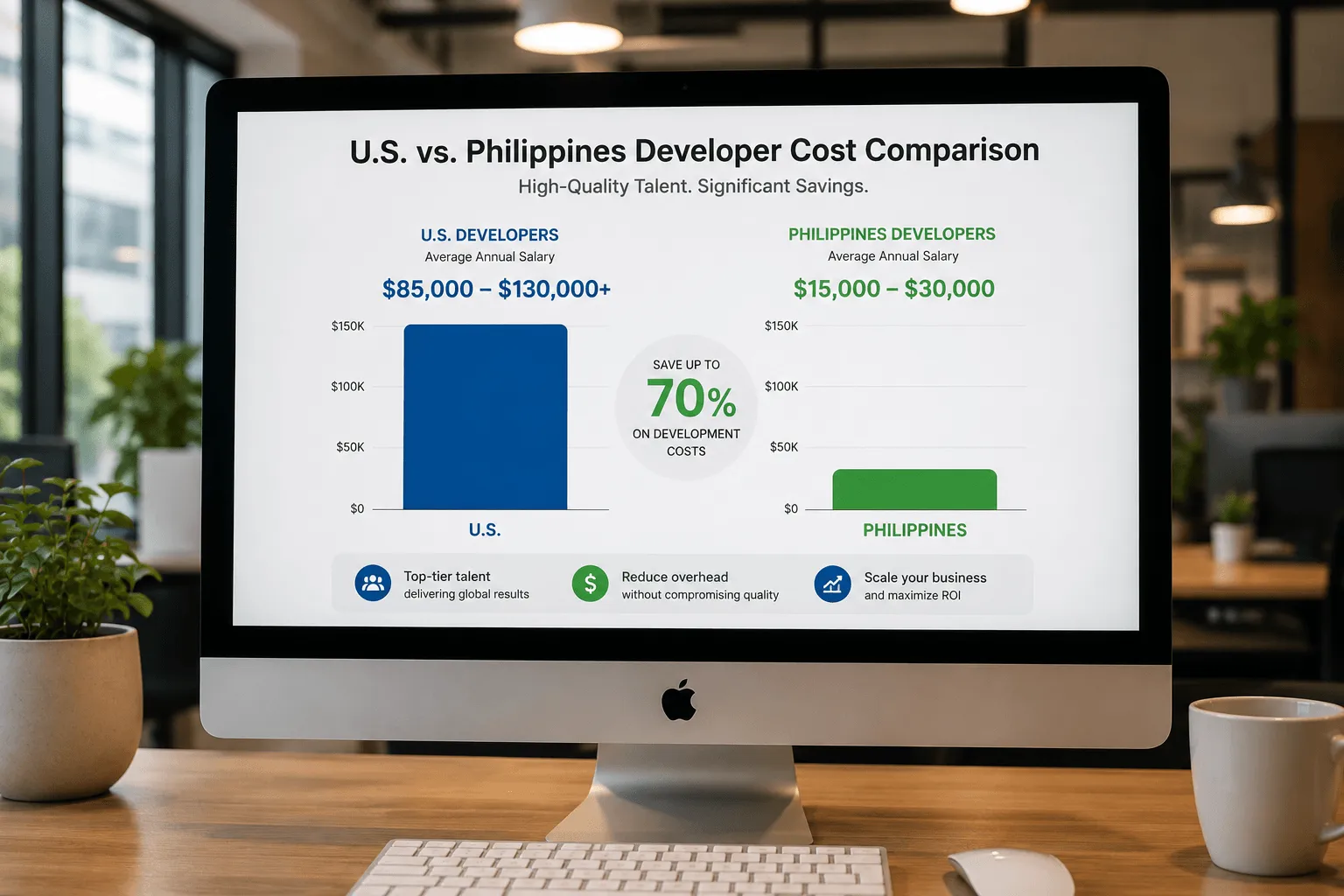
Outsourcing web development to the Philippines can cut your development costs by 60% to 80% compared to hiring locally in the United States. For a small business or startup watching every dollar, that kind of savings can be the difference between launching a product this quarter or waiting another year.
The Philippines has quietly become one of the top destinations for tech outsourcing, and it is not hard to see why through . The country produces over 100,000 IT graduates annually, English is an official language, and the cost of living keeps developer salaries a fraction of what you would pay a comparable talent in California or New York. But knowing the exact numbers, the realistic trade-offs, and how to pick the right partner is what actually determines whether you walk away ahead. Let us break all of that down.
Why U.S. Businesses Are Turning to Philippine Web Developers
The American web development market is expensive by almost any measure. According to the U.S. Bureau of Labor Statistics, the median annual salary for a web developer in the U.S. is around $78,000 to $110,000 depending on specialization and location. Add benefits, payroll taxes, equipment, and onboarding costs, and a single mid-level developer can easily cost your business $120,000 or more per year.
Philippine developers, working through agencies or on direct contracts, typically cost between $15 and $45 per hour. A senior full-stack developer in Manila might earn $25,000 to $35,000 per year in total compensation. That math alone explains the migration of development budgets toward Southeast Asia.
But cost is not the only draw. Philippine developers are deeply familiar with Western business culture thanks to decades of business process outsourcing (BPO) work. They are trained to communicate clearly, meet deadlines, and adapt to client expectations. Many agencies serving U.S. clients operate on overlapping time zones or maintain flexible schedules to bridge the gap.
Realistic Cost Breakdown: What You Actually Pay
Understanding the pricing landscape is key to answering how much can you save outsourcing web development to the Philippines. The numbers vary based on the type of engagement, the developer's experience level, and whether you are working with a freelancer or a structured agency.
For context, a typical 10-page business website in the U.S. might cost $8,000 to $25,000 if built locally. Through a reputable Philippine development agency, the same project often lands between $2,000 and $7,000 depending on complexity, with no meaningful drop in output quality when you work with an experienced team.
Hidden Costs to Watch For
Not all savings are as clean as the rate comparison suggests. Here are the additional costs that can eat into your budget if you are not careful:
- Revisions and scope creep: Always define project scope in writing before work begins.
- Project management time: You may need to invest 3-5 hours per week in communication and feedback.
- Quality assurance: If the agency does not include QA in their quote, budget separately.
- Time zone coordination: Asynchronous workflows require clear documentation and task management tools.
How Philippine Agencies Deliver Quality at Scale
One of the most common concerns U.S. businesses raise is whether lower costs mean lower quality. The short answer is no, provided you choose the right partner.
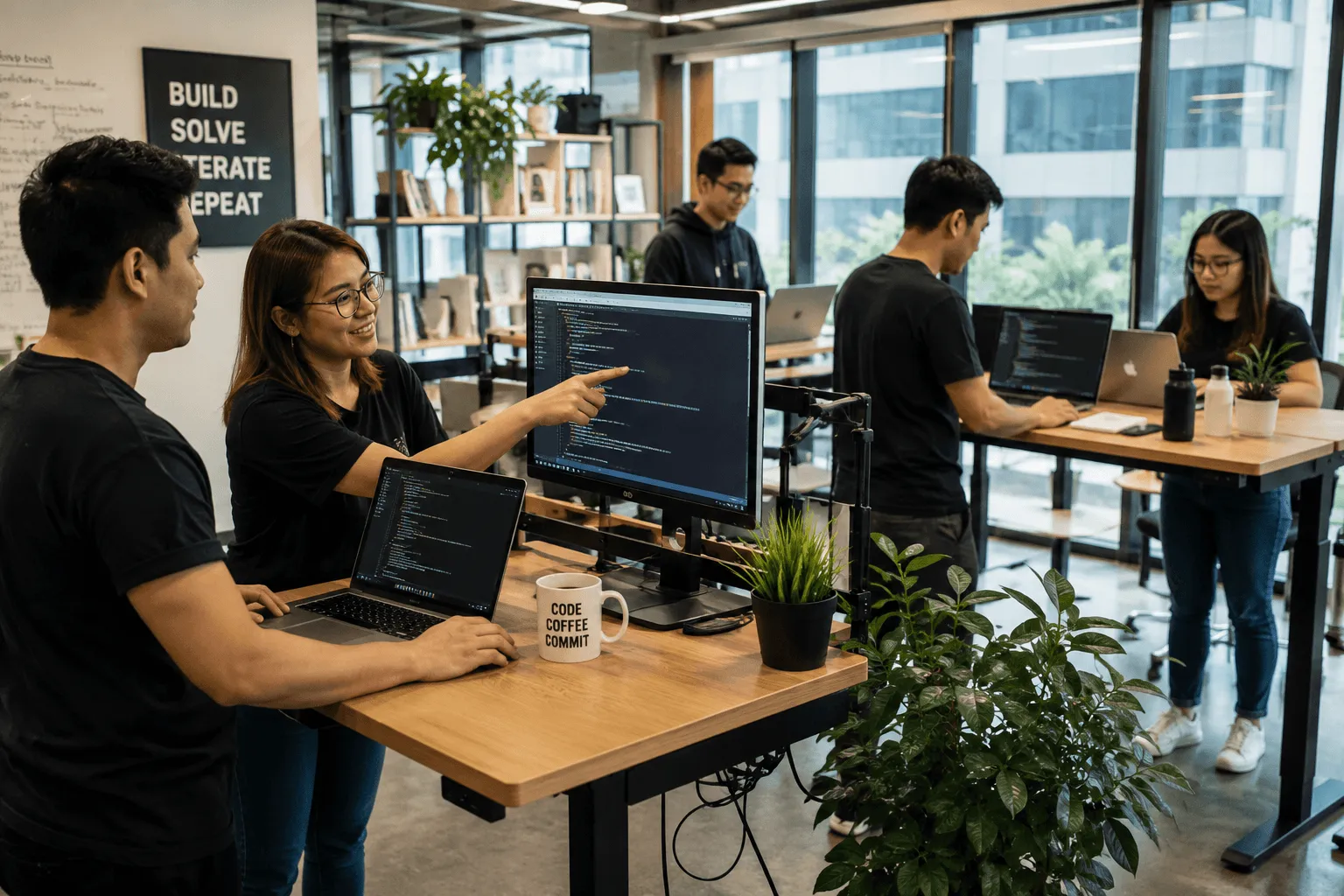
Top Philippine web development agencies use the same technology stacks you would find at any competitive U.S. firm: React, Laravel, WordPress, Shopify, Node.js, and more. Project management frameworks like Agile and Scrum are standard. Many agencies are ISO-certified and work with clients across the U.S., Australia, and the U.K. on a regular basis.
Weblikha is a website development agency built specifically to serve businesses that want professional-grade web development without the inflated overhead of hiring locally. You can explore their works to see the kinds of projects they have delivered for real clients, which gives you a concrete sense of output quality before committing to anything.
Calculating Your Actual Savings: A Practical Example
Let us say you are a U.S.-based e-commerce brand that needs a full custom website: five-page marketing site, WooCommerce integration, custom checkout flow, speed optimization, and ongoing maintenance.
Local U.S. Agency Quote: $35,000 for the build, plus $2,500 per month for maintenance.
Philippine Agency Quote: $9,000 for the same build, plus $700 per month for maintenance.
Over the course of one year, your U.S. option costs $65,000. The Philippine option costs $17,400. That is a savings of $47,600 in the first year alone, with ongoing savings compounding annually. Even if you account for additional project management time on your end (say, 5 hours per week at your own billing rate), the numbers still strongly favor outsourcing.
This kind of return is why mid-size companies, agencies, and even tech startups that raised seed rounds are routing their development budgets offshore without apology.
Things to Know
Before you send your first project brief overseas, there are some practical realities worth keeping in mind:
- English proficiency is high, but accents and idioms vary. Written communication tends to be cleaner and more reliable than voice calls in early-stage projects.
- Philippine public holidays differ from the U.S. The Philippines observes about 20 national public holidays per year, some of which may not overlap with your schedule. Build buffer time into deadlines.
- Payment methods matter. PayPal, Wise, and direct bank transfer through SWIFT are the most common options. Factor in transfer fees if paying in smaller increments.
- Time zone difference is significant. The Philippines is 12-13 hours ahead of Eastern Standard Time, so real-time collaboration requires scheduling discipline.
- Intellectual property protections should be written into contracts. Make sure your agreement specifies that all work product is owned by your company.
- Not all agencies are equal. Verify track records, ask for references, and review actual code samples when possible.
Choosing the Right Development Partner in the Philippines
Finding the right agency is where most of the risk actually lives. The Philippine freelance and agency market is large, and quality varies widely. Here is how to approach the vetting process:
What to Look For
- A portfolio with projects in your industry or of similar complexity
- Clear communication during your initial inquiry (slow responses are a red flag)
- Transparent pricing with itemized quotes rather than vague "starting from" numbers
- References from U.S. or U.K.-based clients you can actually contact
- A defined process for revisions, QA, and handoffs
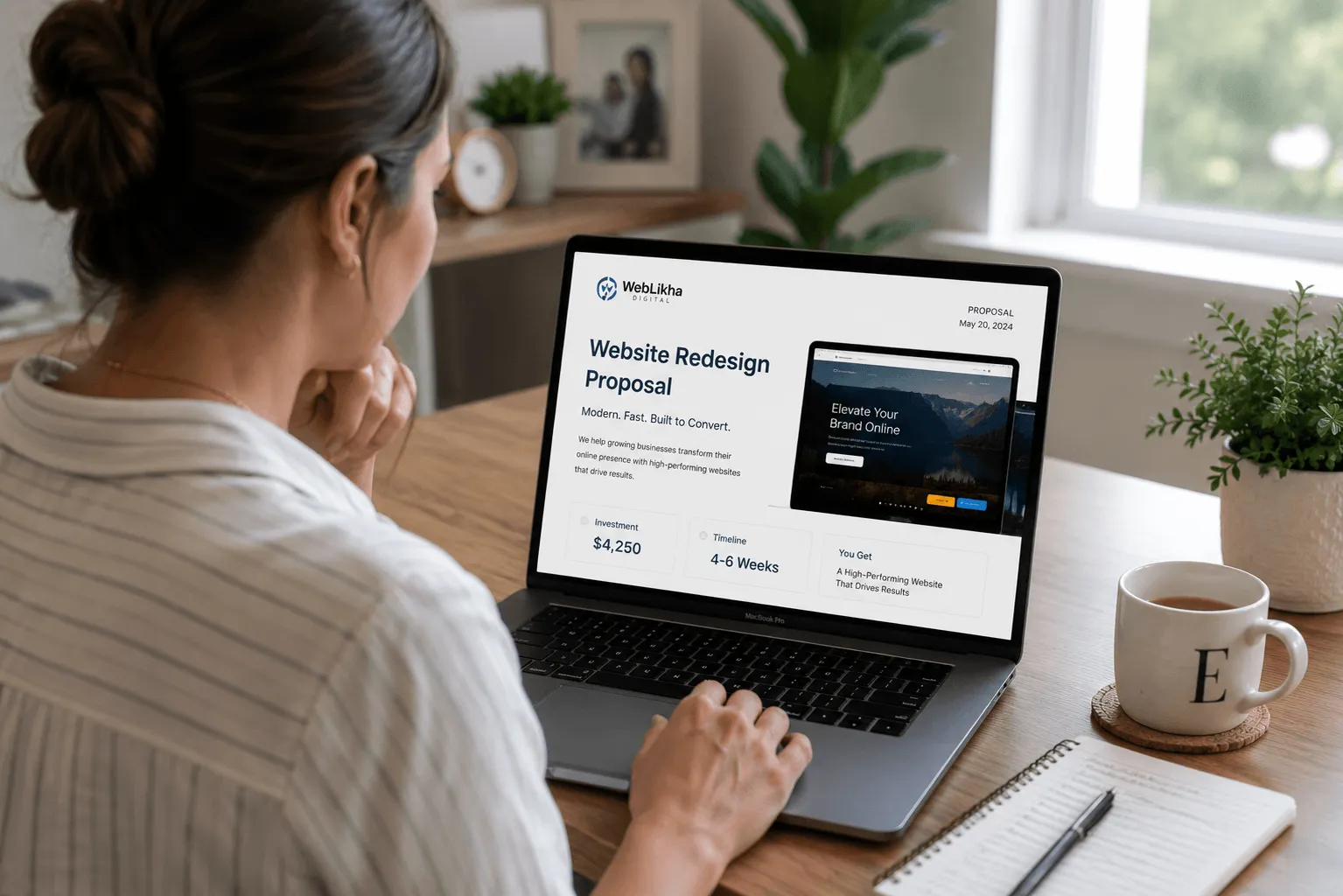
Weblikha checks these boxes. You can read more on their about us page to understand their background, team structure, and approach to client partnerships. If you are ready to get specific, reaching out directly via contact us will get you a real response from a team that understands Western business expectations.
The agency's homepage at gives you an immediate sense of their design standard, which is relevant because agencies that maintain high standards for their own brand tend to maintain them for client work as well.
Frequently Asked Questions
Q: How much does outsourcing cost in the Philippines?
Outsourcing costs in the Philippines typically range from $8 to $60 per hour depending on skill level and whether you use a freelancer or an agency.
Junior roles and basic development tasks sit at the lower end of that range, while senior developers and full-service agencies with project management and QA included will be closer to $40-$60 per hour. Monthly retainers for ongoing development work can range from $1,500 to $9,000 depending on scope and team size.
Q: How much money do companies save by outsourcing?
Companies that outsource web development to the Philippines typically save between 60% and 80% compared to equivalent U.S.-based hiring costs.
For a business replacing a single $100,000/year U.S. developer with a comparable Philippine team, annual savings can exceed $60,000 after accounting for overhead, benefits, and taxes. Over multiple years and multiple roles, these savings compound significantly and free up budget for marketing, product development, or operations.
Q: How much does a Web Developer cost in the Philippines?
A web developer in the Philippines earns between $8,000 and $35,000 per year depending on experience, specialization, and employer type.
Junior developers at local companies might earn closer to $8,000-$12,000 annually, while senior developers at international-facing agencies can earn $25,000-$35,000. When you hire through an agency as a U.S. client, you pay a rate that includes the developer's salary, management overhead, and operating costs, which is why agency rates per hour are slightly higher than direct freelance rates.
Q: Is web development in demand in the Philippines?
Yes, web development is one of the fastest-growing tech disciplines in the Philippines, driven by both local digital transformation and international outsourcing demand.
The Philippine IT-BPO sector generates over $29 billion in annual revenue and employs more than 1.3 million workers, with web and software development representing a growing share of that output. The government actively supports STEM education and tech sector growth through programs managed by the Department of Information and Communications Technology (DICT), making the talent pipeline strong and expanding year over year.
Q: How do Philippine developers bridge communication barriers?
Philippine developers bridge communication barriers through strong English proficiency, familiarity with Western business culture, and structured communication tools and processes.
Most professional agencies use project management platforms like Asana, Jira, or ClickUp alongside communication tools like Slack to maintain transparency. Regular update calls, written briefs, and detailed documentation are standard practice at quality agencies. Many developers also adjust their working hours to overlap with U.S. business hours, making real-time collaboration more accessible than the time zone gap might suggest.
The Bottom Line on How Much Can You Save Outsourcing Web Development to the Philippines
The savings are real, substantial, and well within reach for businesses of almost any size. A typical U.S. company can cut its web development spend by 60% to 80%, redirect those savings into growth, and still receive professional, high-quality output by choosing the right partner.
The key word there is "right." Doing a quick search on a freelance platform and hiring the lowest bidder is a different proposition entirely from engaging a structured agency with a verifiable track record, a clear process, and communication standards that match your own. Weblikha was built to fill that gap for U.S. businesses that want the cost advantages of working with Philippine developers without the guesswork of vetting individuals on their own.
Your next step is simple: review their portfolio, read through their process, and reach out with your project details. You will know within the first conversation whether it is a fit, and that is exactly the kind of confidence you should have before committing a development budget to any partner.

